

Megan
Product Expert
Megan works the front end of the showroom, where she diagnoses customers' repair issues on the spot and recommends the right fix or service before they even sit down. She's an expert on every machine Vacuums R Us sells, demonstrating them hands-on and helping customers find the perfect fit for their home, their floors, and their priorities. Off the clock, she's a certifiable information junkie, the kind who falls down a research rabbit hole for hours and then shows up the next day ready to share everything she's learned, whether you asked or not. She's also been known to lose entire nights arguing the merits of one vacuum over another with strangers on the vacuum cleaners subreddit, and she does not lose gracefully.
The reviews they stand behind

- Ease of Maintenance4.5
Let me tell you how I learned to trust this machine's maintenance design. The first time my ex partner ever used my brand new D4, they sucked up a sock. First use, right out of the box. The sock wrapped the brush roll and rode halfway into the trap door on the bottom of the power head, and that trap door made it so easy to fix: sock out, no damage to the roller, no damage to the housing, the sock even survived. I was very, very impressed. With the machine. The routine on a D4 is simple. I clean hair off the brush roll about every other use, and access is easy. The bag schedule depends entirely on your environment, and there is a handy dandy bag light indicator worth minding, because performance does drop when the bag gets super full. It’s recommended every two years to replace the filters and bring it in for a regular service, where a tech cleans out what needs cleaning and re-oils what needs oil. The filter set plus the labor puts that two year visit in the medium cost range, which for a machine in this class is reasonable. So the whole program is: mind the bag light, clean the roller, filters and a checkup on the two year mark. And if somebody in your house feeds it a sock, the machine forgives them faster than you will.
- Maneuverability5.0
The D4 is a large machine that does not act like one. It has about a 320 degree swivel neck at the base of the canister where the hose connects, so it follows you around couches, chairs, and beds instead of fighting you. Very, very rarely does it flip over, and the times it has with me, it caught the corner of a rug. This machine is very over engineered, and I mean that as a compliment. It just about wants to drive itself. My favorite usability piece is that everything lives at the handle. Suction up or down, brush roll on or off, right at your thumb, so transitioning from carpet to bare floor and back takes one second and zero bending down. Then there is the cord: retraction for moving room to room, plus a 40 foot reach, so you are not hunting outlets through half the house. When Josh asked me for something I do not like, I needed a long pause. What I landed on: the hose can get a little bit wild when you are maneuvering it, and I have knocked a glass off a table with it. I am willing to admit that there may be more user error than machine. As canister vacuums go, this is one of the easier machines on the market to live with, and easier than plenty of machines half its size.
Measured by Attributed Professional Opinion - Tool Efficacy4.5
Out of the box the D4 comes with a parquet tool, a crevice tool, an upholstery tool, and a duster tool, and I actually use all of them about once a week since I vacuum three times a week.That toolset gets a workout at my house. What I see from the sales floor is a little different: D4 customers usually end up adding the toolkit and using those pieces instead of the standard bare bones tools. And there are three add ons that basically everybody wishes they had. The extension hose, so you can do your stairs or detail your car while the canister stays parked in the garage. The turbo tool, an air powered brush roll that pairs with that hose for stairs and car seats. And the flexible crevice tool, which gets into dryer vents so easily that I use mine more than I probably need to, plus the sides of the fridge, under the stove, and couch cushions. Compared to other machines in its class, the standard set is more than what you normally get, a strong starter kit that all works. The reason this is not a five is the same reason I tell customers to budget a little extra on day one: the three tools people end up wanting most are the three that are not in the box
Measured by Attributed Professional Opinion - Deep Soil Removal4.0
We run comparison tests on the sales floor all the time, and my favorite is the sand test. We keep an old Dyson on the floor for exactly this. The Dyson goes over the sand first and the D4 follows, then we run it vice versa, and the D4 outperforms the Dyson all of the time, both directions. It is better than a Shark by miles. This machine is a beast, and it outperforms any average unit on the market at pulling debris up out of carpet. Now the placement, because a score is only worth something with the field around it. Against the Riccar R30, the best carpet digger I know since it has two motors, the D4 does not hold up. It is a step behind the very best. And on the higher end of plush it tends to struggle a little. The one thing I wish SEBO would add is an extreme height adjustment for the people who really dig their seventies shag. For every average household plush carpet and everything below it, the D4 meets the carpet where it lives. One design touch that shows they thought about actual homes: for delicate ornamental rugs and wool, SEBO makes a soft bristle brush roll that fits this unit, so your good rug gets cleaned instead of eaten. Deep cleaning verdict: beats everything average, bows only to the best.
- Pet Hair Pickup5.0
I live with three long haired cats, I have long hair myself, and I demo this machine on pet hair for a living, so I have receipts on this one. In demos we use a fake fur called Kapok, and I will put out an armful that looks like a tiny chihuahua. The D4 is a beast about it. Bare floor, carpet, plush carpet, it sucks that pile up clean and does not smear it around. At home, three cats worth of hair ends up in the bag where it belongs. I am not aware of a single pet hair claim on this machine that does not hold up, and I check, because this industry loves advertising anti tangle miracles that die in a week. Ask me the best pet hair machine, period, and my answer is either the D4 or the Riccar R30. I have been pushed on whether there is a big difference between them on pet hair, and my answer stays no. The bottom of that field, for the record: stick vacs, Sharks, and robot vacuums at the absolute worst. So when a pet household asks me what to buy, they get this machine or the R30 depending on whether they want a canister or an upright, and either way the hair ends up sealed in a bag instead of woven into their carpet or wrapped around a roller.
- Bare floor5.0
I threw out my analog vacuum (broom) because of this machine. On the bare floor with the parquet tool, which comes standard, the D4 picks up everything with ease. Fine dust, sand, powders, and the large stuff, kibble, rice, litter, all of it, no drama. My favorite bare floor feature lives on the ET1 power head: a little extension bit with airflow grooves on the side that lets you follow your baseboard and pull the debris in, instead of ramming the front of your machine into every foot of trim like most vacuums make you do. The edges of the room come out clean, no dust line, no second trip with a crevice tool. So why is this not a five? Because of an honest sales floor answer. If your whole house is bare floor with a throw rug or two, the right machine is not a D4 at all. It is the D1, the straight suction SEBO without the power head, because you would be paying for carpet muscles you never use. The D4 is the bare floor machine for a mixed home, carpet in some rooms, hard floor in others, and on those hard floors it is excellent.
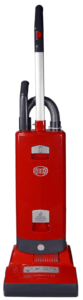
- Ease of Maintenance4.5
The roller has a nice little door and the whole thing just pops out, so cleaning it is very, very easy, no tools, no ceremony. The bag gets replaced it when it fills, in most homes every month or two. The filters go about every two years. The belts are cogged style belts protected by a clutch system, so belts are only replaced when they fail which is rarel. My one caution, and the reason this is not a five, the filter replacement mechanism can confuse people. The internal filter loads through a mechanism a lot of owners do not understand, and we have seen machines come in with that mechanism broken because somebody tried to force it. Let the service visit handle the filters, and this machine barely needs you.
Measured by Attributed Professional Opinion - Maneuverability3.5
The X7 is one of those boxy style machines, no pivot to it, so it steers like the upright it is rather than flowing around furniture the way the swivel machines do. It is a bulky machine, but it can get under things, and that redeems a lot. The distinctive feature here is the automatic height adjustment. The machine senses the surface and sets the brush height itself, which is exactly why I put it in the hands of my elderly customers who want an upright without fiddling, and why it makes a great starter machine, you never think about height again. The height nobody adjusts on other machines is the height that ruins their cleaning, so automating it away matters more than it sounds.
Measured by Attributed Professional Opinion - Tool Efficacy3.5
This machine carries the standard set, crevice tool, dusting brush on a handle clip, and the upholstery tool riding on the back of the machine next to the crevice tool. Good, usable, familiar tools, and I barely need to demo them because upright buyers already know exactly what to do with them.
Measured by Attributed Professional Opinion - Deep Soil Removal4.0
This guy is great, a solid four out of five, and I say that from extensive testing, because the X7 is one of the two SEBO uprights on our showroom floor and I demo it constantly. The automatic height adjustment is really the deep cleaning feature here, not just the convenience feature. Deep soil removal depends on the brush actually engaging the carpet at the right height, and on manual machines, nobody ever adjusting the height is the reason their vacuum stopped cleaning. We often see machines come back set to the maximum height, touching no carpet at all, with the owner reporting it broken. The X7 removes that entire failure mode: it finds the pile, sets itself, and keeps the brush working the fibers where the embedded dirt lives, every time, for every user, including the ones who never read a manual. Add SEBO's build and airflow behind that always correct brush engagement and you get consistent, genuinely deep extraction on everything from low pile to plush.
Measured by Attributed Professional Opinion - Pet Hair Pickup4.0
It is great on pet hair, there is a reason the X7 specifically comes in a Pet model. It does great on pet hair, so SEBO leaned in and built a X7 Pet configuration around it. My evidence is nightly. Several dogs work at our stores, and when I vacuum at the end of the day, the X7 is what I reach for, partly for the automatic height adjustment and partly because it gets all of those pet hairs out of our black rugs. The height adjustment makes a big difference in pet homes specifically, because hair collects on every different surface in the house, and the machine resets itself correctly at every transition instead of riding too high on the rug where hair hides deepest.
Measured by Attributed Professional Opinion - Bare floor4.0
It picks up really well on bare floor, a four out of five, on one condition that every X7 owner needs to know, wait for the machine. The automatic height adjustment that makes this machine effortless everywhere else needs a second or two at the transition to sense the hard surface and reset the brush height. Give it that moment and it does great, fine dust and larger debris both, cleanly and without drama. Do not give it that moment, come flying off the high plush straight over a pile of debris, and it is going to scatter that pile across your entire floor, and now you have made twice the work for yourself. That is not a flaw so much as a rhythm: this machine handles the transitions for you, where other machines make you flip a switch on yours. Once you have the rhythm, bare floor life with the X7 is easy, the same automatic correctness that keeps the brush right on carpet keeps it right on tile and hardwood, with no switch to remember and no setting to forget. Patience for one breath at the doorway, and the hard floors come out as clean as the carpets.
Measured by Attributed Professional Opinion
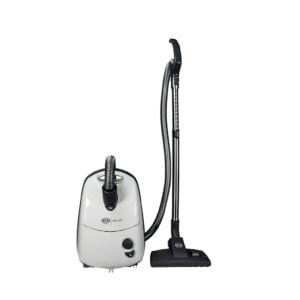
- Ease of Maintenance4.5
Maintenance on the E1 is about the shortest list in the store, because a straight suction machine has almost nothing to maintain. Job one: change the bag out regularly. That is genuinely about it for the owner's routine. The filters go about every two years, and while a consumer can do them on their own, we recommend timing them with the service visit that should be happening every two years anyway, so in practice the filters take care of themselves. No brush roll to clear, because there is no brush roll. No belt to stretch, because there is no belt. The entire failure tree of a powered vacuum simply is not present on this machine, which is the advantage of the straight suction design: the fewer moving parts a machine has, the less of your Saturday it can claim.
Measured by Attributed Professional Opinion - Maneuverability3.9
I rate this a 3.9, and yes, I mean 3.9 and not a flat four, because the missing tenth has a name. The general E style SEBOs ride on three wheels, and three wheels makes them more prone to barrel rolling, tipping over sideways when you take a corner with enthusiasm. That is the one thing keeping this from a solid four, and it is a real thing you will do from time to time. Everything else about moving this machine is a pleasure. It follows, it turns, and the ease of use is basically the same story as the maneuverability with one bonus: it is actually a lot easier to get under things than most machines, because the heads are designed low enough to go under couches and beds and keep going. So a nimble, low, cooperative canister with a slight tumbling habit. Learn to take your corners like an adult and it is a four. I dock the tenth on behalf of everyone who will not.
Measured by Attributed Professional Opinion - Tool Efficacy3.5
The E1 carries the typical SEBO hand tools, an upholstery tool and a crevice tool, with the dusting brush mounting on the wand, and I will confess the duster's mounting spot is forgettable enough that I had to be reminded where it lives, which is fitting, because those wand mounted dusters are forever falling off onto the floor mid job. That is the one demerit on an otherwise easy set. The genuinely good part is how the tools deploy: you can disconnect at the head and run your hand tools on the full wand for extended reach when you are going up high, or connect them right at the handle when you need to get in close on couch cushions. That two position flexibility makes the same three tools cover more jobs than they would on most machines, high shelves and tight upholstery with the same kit. So: standard tools, smart deployment, one runaway duster. For a straight suction machine whose whole life is above floor and bare floor work, the tools matter more than usual, and these are up to the job with a 3.5 worth of polish.
Measured by Attributed Professional Opinion - Deep Soil Removal1.0
For this machine, deep soil removal gets a zero to one star, and I will use the one because the scale starts there. The E1 is a straight suction machine. It does not have a powered head, and deep cleaning is a powered head's job: something has to agitate the carpet and break the embedded debris loose before suction can carry it away. With no brush driving into the pile, this machine can do bare, topical surface cleaning of a carpet, lift the loose litter off the top, freshen a flat area rug, and that is the ceiling. It does not do a great job at actually pulling debris up out of the carpet fibers, because nothing in it ever touches the carpet fibers. I want to be clear that this is design, not defect. SEBO built the E1 as the bare floor specialist in the line, and the machine spends its ability where it was designed to spend it. But this topic asks specifically about deep soil in carpet, and on that question the E1 simply does not participate. Carpet homes need the powered machines.
Measured by Attributed Professional Opinion - Pet Hair Pickup1.0
Pet hair on carpet is the same story as deep soil for the E1, and for the same mechanical reason, so the score matches: a one. Pet hair sticks to carpet, weaves into the fibers, and clings; removing it takes agitation, a powered brush scraping and flicking the pile to break the hair's grip before the airflow can take it. The E1 is a straight suction machine with no powered head, so it has nothing to break that grip with. Loose clumps sitting on the surface, it will inhale without complaint. The layer of coat a shedding animal actually lays down into a rug stays right where the animal left it. So if your household is pets plus carpet, this is simply not your machine, and no accessory or technique changes that. The place a pet household can use an E1 is the same place anyone can: the bare floor, where hair collects in drifts along the baseboards, and where this machine works beautifully.
Measured by Attributed Professional Opinion - Bare floor5.0
Bare floor gets a five out of five from me, because bare floor is all this machine is designed for, and total commitment shows. The E1 is a straight suction machine, and SEBO built a special head for its straight suction machines that turns that simplicity into an advantage: it gets into all the grooves, and it has airflow holes on the side, so you can run it right along your baseboards and it keeps pulling the whole way, no dirt stripe against the wall, no going back with a crevice tool. Tile grout lines, plank gaps, the drift of dust and hair that collects at the edges of every hard floored room, this head was drawn specifically for that terrain. And with no brush roller anywhere in the machine, there is nothing to scatter the big debris or flick the litter across the kitchen, the perpetual sin of powered heads on hard surfaces. Suction, glide, edges, done. Really great machine at exactly this. Pair it with the low form factor that slides under the furniture and the E1 is bare floor cleaning solved. In its arena, it concedes nothing to machines three times its price.
Measured by Attributed Professional Opinion
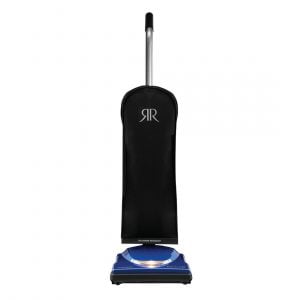
- Ease of Maintenance4.0
Maintenance on the R10E comes down to the belt and the bag, and both are so simple. The belt is a rubber stretch belt, so it stretches out over a course of about six months, and we recommend replacing it every six months to a year depending on how hard you run the machine. The job itself: push two clips back, the base plate lifts off, take out the brush roll, loop the new belt over the belt bar, attach it to the roll, drop it back in, plate on. Bam, belt change done. The bag is the same story, pull it off its dock, close the bag, put a new one on the dock, done, on whatever schedule your home's dirt sets. Cleaning the brush roll is the same two clips as the belt, so hair clearing is minutes. The recurring belt is the one ongoing cost of this machine's simplicity, and it is the reason this is a four instead of higher. But every job on this machine can be done at a kitchen table by anybody, and the commercial crews who own fleets of them do exactly that.
Measured by Attributed Professional Opinion - Maneuverability4.0
The R10E is pretty okay on paper for maneuverability and better than that in your hands. There is no swivel neck on it, which normally costs maneuverability points, but this machine is so lightweight, eight pounds, that you can literally pick it up and move it whichever way you need. The lightweight counteracts the lack of a pivot neck: where a heavy upright without a swivel becomes a wrestling match, this one you just lift and place, lift and place, all day. And all day is exactly how it gets used, because this machine is our most popular unit for commercial customers in our stores. One of my favorite commercial cleaners runs a fleet of about fifty of these, rotating them through as they wear, and brings me four at a time to diagnose. Machines that professional crews carry between houses, up staircases, and in and out of vehicles for a living do not stay in fleets if they fight the person holding them.
Measured by Attributed Professional Opinion - Deep Soil Removal4.0
It does a great job, and the reason is the architecture. The R10E is a direct air motor machine, meaning there is no hose attachment in the dirt path at all: the machine sits on the carpet beating the ground and pulling all of that debris straight up through itself. Direct air is the old formula for deep cleaning, dirt through the fan, no detours, no losses, and this machine runs it in an eight pound package. The professional crews who run these are cleaning other people's carpets for money, house after house, and their standard is dirt actually leaving the carpet, because their clients walk the results. A fleet owner with fifty of these machines is fifty votes that the digging is real. In a home, the same head and the same direct path pull the worked in grit out of everyday carpet without asking the owner to push anything heavier than a gallon of milk. It gives up the top of the scale to the two motor machines, as every lightweight does. Below that tier, this humble commercial workhorse out digs machines with far bigger advertising budgets.
Measured by Attributed Professional Opinion - Pet Hair Pickup4.0
Great on pet hair, and it is one of the reasons this is our most common commercial cleaner vacuum, which is the strongest endorsement a machine in this class can carry. Think about what a cleaning crew's week looks like: a different house every few hours, most of them with animals, every carpet holding a different coat. The R10E's direct air design and aggressive beating action hook the hair that sticks to carpet fibers and drive it straight into the bag, and when hair does wind the roller, the two clip base plate means clearing it is a two minute stop, not a repair visit. I rate it about a four star out of five. The top of the pet hair scale stays with the R30, the two motor machine nothing else touches. But for an eight pound vacuum that a house cleaner can run up three flights of stairs, a four on pet hair is the superpower that keeps these machines selling all of the time.
Measured by Attributed Professional Opinion - Bare floor2.0
This unit runs high speed only, and the brush roll is always on, no switch, no half speed, no bare floor mode. So take it onto hard surface and the spinning roller does what spinning rollers do to loose debris: it will outperform a DC33 in the sense that it can actually pick up the rice, but it will also shoot that rice fifty feet behind you across the room. That is the bare floor experience: genuine pickup power fighting its own roller the whole time. There is no way to calm the machine down, so every hard floor pass is a negotiation between what the suction grabs and what the roller launches. For a home with serious hard floor square footage, this is the wrong machine. Riccar makes the right one in this same product line. The Supralites higher up the line carry a half speed switch for exactly this.
Measured by Attributed Professional Opinion
3.9
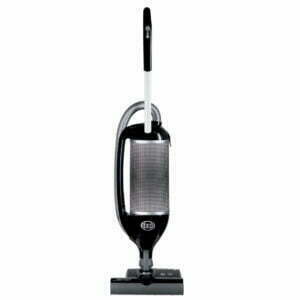
- Ease of Maintenance5.0
Maintenance on the Felix runs very, very similar to the D4, and from me that is a compliment. The recommendation is a regular service about every two years, with the filter set replaced at the same visit. The bag is environment based, how fast you fill it depends on your house, and the bag light on this machine earns its keep twice over: it tells you when the bag is full, and it will also tip you off when you have a clog. Paying attention to that light is genuinely protecting the longevity of your machine, since a Felix that cannot breathe is a Felix wearing itself out. Weekly, you clean the hair off the brush roll, and the ET1 head keeps that easy with the same accessible roller and trap door design that has already saved a sock in my house on its sibling machine. Cost wise, the filter set plus a couple hours of shop labor puts the two year service visit in the medium range, nothing that should scare an owner at this price level. So the whole program is: watch the light, clear the roller weekly, filters and a professional once over every two years. Simple routine, clear indicators, and a machine that tells you what it needs before the need becomes a repair.
- Maneuverability3.0
I am going to be personal about this one, because it is the reason I own the machine I own. When I was choosing my own vacuum I went down the research rabbit hole between the Felix and the D4, and I settled on the D4 because the Felix was too heavy for me. I have health stuff that makes my arms weak pretty frequently, and the Felix design has a narrow neck where the body meets the power head, which means the user is carrying the machine's weight in their hands while pushing it around. On my weak days that is a dealbreaker, and I am not the only customer that math matters for. On a normal day with both hands available, it maneuvers pretty alright. It can get cumbersome because of the weight, and sometimes you end up using both hands to twist it around a corner. It still definitely outperforms a Shark, that is for sure. Here is how I frame it honestly on the sales floor: the Felix is the step between the bad Shark somebody is escaping and the high end D4, and it handles like that middle step. Stronger and better built than what they came from, heavier in the hands than where they could go. If weight matters in your house, lift both before you decide.
- Tool Efficacy3.5
The modern Felix comes with a crevice tool, a dusting tool, and the premium parquet tool. I will own a correction here: I thought it came with an upholstery tool, and it turns out modern Felix configurations do not include one, though some older configurations did. That gap matters, because I think more people would use an upholstery tool than the duster if it came in the box, and half of them confuse the two anyway. The dusting tool does get used, it attaches easily to the hose. The premium parquet tool is a 50-50 story. The people who use it tend not to love it, because you cannot put the machine in its upright position with it on. You are holding the machine the entire time, so it comes out for the occasional big deep clean and otherwise lives in the closet. What people end up adding tells the story: the upholstery tool, the extension hose, because a lot of owners want to leave the Felix at the base of the stairs and the built in hose does not reach the top, and there is a different hard floor attachment, better than the premium parquet tool, that actually lets the machine stand upright while you use it. A good machine deserves a better out of box toolset than this one gets. Workable, but it is the thin spot on the Felix.
- Deep Soil Removal4.0
The Felix does pretty well on the deep stuff, the grit and sand and grime worked down into carpet, and I can place it precisely because we run side by side tests on the sales floor constantly. So many. It is definitely a higher performer than the standard Shark or Dyson you would bring home from a big box store. It does not perform the same as the D4, and here is the part I find interesting: you cannot see a visible difference in the performance. The Felix and the D4 run the same ET1 power head, so the low pile and high pile versatility is the same, the agitation looks the same, the machine appears to be doing the same work. The difference is the motor, the power and the wattage driving the airflow, and that gap shows up exactly where you cannot watch it happen, in how much of the deep dirt actually leaves the carpet. So the ladder for deep soil runs like this: the Felix sits comfortably above the everyday big store box machines, below its own big sibling the D4, and well below the R30 at the top of the field. For a household stepping up from a worn out budget upright, the Felix will pull dirt their old machine never touched. For the deep clean obsessed, the next rung up exists.
- Pet Hair Pickup4.5
Pet hair on the Felix looks pretty much the same as the D4 in action, and that makes sense, because the power head is the same ET1 and the head is what grabs the hair. The motor is what drives the suction behind it, and that is where the difference hides. The Felix still does an amazing job. It will outperform the other brands a pet owner is likely comparing it against, and I will throw a new one into the mix: it outperforms any Bissell on the market. Does it hold weight to the D4? Not necessarily. It does a great job, but it does not outperform the D4, and nothing in this conversation outperforms the R30. So the pet hair ladder as I see it from the demo floor: R30 and D4 at the top, the Felix a solid step below them, the big box brands below that, and robot vacuums at the bottom of the ocean. For a pet household the practical version is this. If you want an upright and you are choosing between the Felix and anything from a department store shelf, the Felix wins the hair fight without breathing hard. If the cats run your house the way they run mine, the canister upstairs on the pedestal is still the one I hand you.
- Bare floor4.0
The Felix is two different machines on bare floor depending on which tool you commit to. With the premium parquet tool, which comes standard, it does amazing. Fine dust, big debris, clean floor, no complaints. With just the ET1 power head, it does pretty alright: it leaves some trails behind, not too many, and you fix them with one extra pass, versus something like five extra passes with a Shark. The catch is the parquet tool itself. Since you cannot park the machine upright while the tool is on, a lot of owners stop reaching for it, and then they are living the extra pass life full time. Baseboards are the same good story as the D4, same head, same airflow groove trick, so the edges of the room stay clean without ramming the trim. Would I sell the Felix to an all bare floor household with a few throw rugs? I would lean toward something different, more of a straight suction machine built for exactly that life. The Felix earns its keep in a mixed home where carpet is the main event and bare floor is the side quest. There, the parquet tool handles the kitchen and the entryway beautifully, whenever you are willing to hold the machine for the length of the job.

- Ease of Maintenance4.5
The roller has a nice little door and the whole thing just pops out, so cleaning it is very, very easy, no tools, no ceremony. The bag gets replaced it when it fills, in most homes every month or two. The filters go about every two years. The belts are cogged style belts protected by a clutch system, so belts are only replaced when they fail which is rarel. My one caution, and the reason this is not a five, the filter replacement mechanism can confuse people. The internal filter loads through a mechanism a lot of owners do not understand, and we have seen machines come in with that mechanism broken because somebody tried to force it. Let the service visit handle the filters, and this machine barely needs you.
Measured by Attributed Professional Opinion - Maneuverability3.5
The X7 is one of those boxy style machines, no pivot to it, so it steers like the upright it is rather than flowing around furniture the way the swivel machines do. It is a bulky machine, but it can get under things, and that redeems a lot. The distinctive feature here is the automatic height adjustment. The machine senses the surface and sets the brush height itself, which is exactly why I put it in the hands of my elderly customers who want an upright without fiddling, and why it makes a great starter machine, you never think about height again. The height nobody adjusts on other machines is the height that ruins their cleaning, so automating it away matters more than it sounds.
Measured by Attributed Professional Opinion - Tool Efficacy4.0
The X7 comes in two versions, and the toolset is a difference between them, so let me lay it out. Both machines carry the standard set, crevice tool, dusting brush on a handle clip, and the upholstery tool riding on the back of the machine next to the crevice tool. Good, usable, familiar tools, and I barely need to demo them because upright buyers already know exactly what to do with them. The X7 Pet adds the pieces that change the machine: the extension hose, about twelve feet of it, the turbo brush, and a charcoal filter. That hose and turbo combination is really great when you are trying to do stairs or detail a car, which is not exotic use, it is Tuesday. And that is my one criticism of the lineup: the regular X7 should also come with the extension hose, because the average consumer has stairs or a car, and at this machine's price the reach should not be a separate purchase. So the Pet configuration earns this score outright.
Measured by Attributed Professional Opinion - Deep Soil Removal4.0
This guy is great, a solid four out of five, and I say that from extensive testing, because the X7 is one of the two SEBO uprights on our showroom floor and I demo it constantly. The automatic height adjustment is really the deep cleaning feature here, not just the convenience feature. Deep soil removal depends on the brush actually engaging the carpet at the right height, and on manual machines, nobody ever adjusting the height is the reason their vacuum stopped cleaning. We often see machines come back set to the maximum height, touching no carpet at all, with the owner reporting it broken. The X7 removes that entire failure mode: it finds the pile, sets itself, and keeps the brush working the fibers where the embedded dirt lives, every time, for every user, including the ones who never read a manual. Add SEBO's build and airflow behind that always correct brush engagement and you get consistent, genuinely deep extraction on everything from low pile to plush.
Measured by Attributed Professional Opinion - Pet Hair Pickup4.0
It is great on pet hair, there is a reason the X7 specifically comes in a Pet model. It does great on pet hair, so SEBO leaned in and built a X7 Pet configuration around it. My evidence is nightly. Several dogs work at our stores, and when I vacuum at the end of the day, the X7 is what I reach for, partly for the automatic height adjustment and partly because it gets all of those pet hairs out of our black rugs. The height adjustment makes a big difference in pet homes specifically, because hair collects on every different surface in the house, and the machine resets itself correctly at every transition instead of riding too high on the rug where hair hides deepest.
Measured by Attributed Professional Opinion - Bare floor4.0
It picks up really well on bare floor, a four out of five, on one condition that every X7 owner needs to know, wait for the machine. The automatic height adjustment that makes this machine effortless everywhere else needs a second or two at the transition to sense the hard surface and reset the brush height. Give it that moment and it does great, fine dust and larger debris both, cleanly and without drama. Do not give it that moment, come flying off the high plush straight over a pile of debris, and it is going to scatter that pile across your entire floor, and now you have made twice the work for yourself. That is not a flaw so much as a rhythm: this machine handles the transitions for you, where other machines make you flip a switch on yours. Once you have the rhythm, bare floor life with the X7 is easy, the same automatic correctness that keeps the brush right on carpet keeps it right on tile and hardwood, with no switch to remember and no setting to forget. Patience for one breath at the doorway, and the hard floors come out as clean as the carpets.
Measured by Attributed Professional Opinion
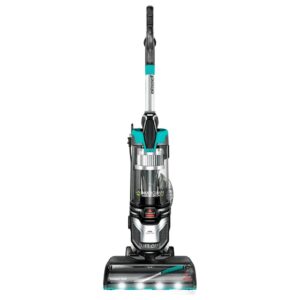
- Anticipated motor and machine lifespan2.0
Reading 3 Years
The average Bissell upright bought today gets used about two to four years before it is either not worth repairing or cannot be repaired. That range is wide because the biggest variable is not the machine, it is the owner. Take care of it, clear the clogs, keep the airflow moving, and it can last you four to five years. Skip the maintenance and you are looking at the short end, around the two year mark. I see both stories at the check in counter every single day, ten to fifteen Bissells a day, so this estimate comes from a lot of machines. Now for my favorite sore spot, the cord reel. People walk in and buy a Bissell specifically because it has cord retraction. That is the feature on the box. Half the time that reel does not work, and Bissell no longer sells repair components for it, so when it fails, it stays failed. You can absolutely keep vacuuming with a dead cord reel, but if I bought a machine for the cord reel and the cord reel died with no fix available, I would be frustrated, and I would and do tell customers exactly that. So the lifespan story on Bissell is short but honest: a budget machine that gives you its two to four years, stretches to five with care, and loses its signature convenience early. Buy it knowing that, and take care of the whole unit.
Measured by Attributed Professional Opinion
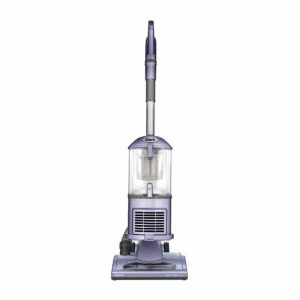
- Maneuverability2.5
A solid 2.5 out of five, and here is both halves of it. A lot of people do like the pivot where the lift off canister connects to the power head, and it does make getting around furniture easy, that part of the design works. The problem is the width: because of how wide the lift off body is, this machine cannot get under couches or beds or things like that very easily, so the places where dirt hides are the places this machine does not go. And there is a wear pattern worth knowing before you buy used or plan to keep one long: the neck locking feature where it connects into the unit is a common break point, and once it breaks, we cannot fix it, because there are no repair components for that part. A machine with a broken neck lock tips over more frequently, and there is no path back from it. Intact, it does not tip regularly and steers acceptably. So you get a decent pivot on a body too wide for the low places, with a known breaking point nobody can repair.
Measured by Attributed Professional Opinion - Deep Soil Removal3.0
Yes, it has a brush roll in it, and yes, it can pick debris up, the visible stuff comes off the top just fine, which is why owners believe in it until they see a comparison. But does it actually do deep cleaning, pull the embedded grit up out of the pile? No. The bristles sweep the surface. A machine whose side by side demo reliably sells the competition is telling you its score itself. I am just writing it down.
Measured by Attributed Professional Opinion - Pet Hair Pickup2.5
Pet hair on this machine runs about the same as its deep cleaning, because it is the same brush roll doing both jobs, and the roll is the limitation. Surface hair comes up, the woven in coat stays where it lives. And then there is the part that turns a mediocre score into a warning for long haired households. Once this roll does pull long hair in, my long beautiful ginger example included, it gets trapped there for eons, and good luck trying to get it out, because you need special bit sets just to take it apart and get into the brush roll. Read that again as a pet owner: the machine collects hair adequately at the surface, cannot reach the deep hair at all, and turns its own catch into a repair scenario because the roll is sealed behind serious disassembly. A pet machine you cannot easily clear of pet hair works against the household that bought it.
Measured by Attributed Professional Opinion
2.6
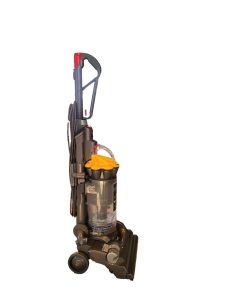
- Ease of Maintenance1.5
Believe it or not, there are two filters in this unit. I feel like nobody knows they exsist. When somebody who has owned this vacuum for a decade brings it in and I ask when the filters were last changed, they look like a dear in the headlights and the answer is always the same: there's a filter? The schedule this machine really wants is dustbin emptied after every room, or the motor overheats. Filters cleaned every use, replaced about yearly, because they are sponges and they load up and get gross. And then the belts. This machine runs a clutch with two belts, engaging and disengaging as you move between carpet and hardwood, and that clutch is the most common failure point on the machine as it wears down over the years. The belts are rubber, rubber dries and goes brittle, and they should be replaced about yearly. Except the belts are hard to come by, and the job is not something a consumer can do. Which is why, in the entire history of this machine, they have basically never gotten replaced. So we have a maintenance routine nobody knows about, on parts nobody can get.
Measured by Attributed Professional Opinion - Maneuverability1.5
Not easy at all, and I say that with some affection, because this is the vacuum I grew up with. The DC33 is a block of a machine that you shove around your house. There is no pivot, so every turn is a drag and redirect, and the body height means you cannot get under couches and you cannot get under furniture, so everything low gets skipped or done on your knees with that overhead hose. When I try to think of machines harder to move than this one, I get all the way to a Kirby before I find one, and a Kirby weighs way more. That is the neighborhood this machine's handling lives in, and it does not have the Kirby's excuse. What it has is history: this was a lot of families' vacuum for a lot of years, mine included, and everybody who ran one remembers the workout. Judged today, against machines that swivel, lie flat, and steer with two fingers, the DC33 is close to the bottom of the maneuverability scale and holding.
Measured by Attributed Professional Opinion - Tool Efficacy2.0
I could not tell you much about the tools that come with the DC33, and that is the review: nearly every one I see has already lost them somewhere in the decade the machine has been around. Tools that mattered would still be with the machine. What I can tell you about is the hose, because the hose is a weird one. It pulls straight up out of the machine, right at you, so to deploy it you are lifting it above your own head to get the whole hose out before you can use it. A very unnatural movement for a human who is just trying to vacuum a corner. You also have to take the entire cord off the machine just to get the hose out. The suction through the hose was great when this machine was new, as these machines lose power rapidly as the cyclones fill with debris and the filters clog with age, the hose weakens right along with everything else. So the above floor story on this machine is missing tools on a hose you fight to deploy.
Measured by Attributed Professional Opinion - Deep Soil Removal1.5
The DC33 is a demonstration machine at our locations, and I want to be clear about which side of the demonstration it is on. We keep it to run the sand demo against the Riccar R30, specifically to show how little the Dyson actually picks up. Here is how the demo goes, every time. A straight line of neon pink sand goes down into the carpet. The Dyson vacuums over it, and you go over that line three or four times before the pink stops showing in the carpet. Then the R30 takes the same test, and its agitation visibly pulls sand out of the carpet the Dyson left from inches away. Not a subtle difference you need training to see, which is why the demo sells machines. The machine that raised a generation on the words "bagless" and "cyclone" does surface work.
Measured by Attributed Professional Opinion - Pet Hair Pickup2.0
Here is the odd compliment on this old machine. It does better on pet hair than a lot of Sharks. The DC33 collects the surface coat of a shedding household passably. You run it over the carpet and visible hair goes in, which for most owners reads as the machine doing its job. What it is not doing is the deep woven hair, the coat worked down into the pile, because as the sand demo shows, this machine does not operate below the surface of a carpet. So better than you would guess, better than machines that should embarrass it, and still firmly in the bottom half of the scale.
Measured by Attributed Professional Opinion
2.6
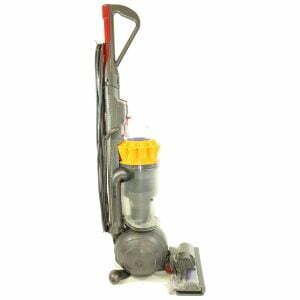
- Ease of Maintenance1.5
Here is the maintenance schedule this machine actually needs, from somebody who sees three or more of them daily, always for repair. After every use: take out the washable filter up by the cyclones, wash it, and let it dry for a minimum of 48 hours, because if a single drop of moisture gets in, the motor cyclone gets mildewy and gross and you have vacuum that smells like a gym locker. After every room empty the dustbin because it fluffs the dirt up in the bin. Every two to three uses clean the brush roll, because if hair reaches the bearings, the roll or gear box seizes. Yearly replace the post motor filter. Now, Dyson's own recommendations run lighter than mine, and I disagree with them, tooth and nail. The motor runs on airflow; filters packed with debris choke that airflow and cook the motor. Follow my schedule and the machine keeps the performance you bought it for. Follow the lighter schedule and the machine ages the way the three on my counter every morning aged.
Measured by Attributed Professional Opinion - Maneuverability2.0
This machine has the famous Dyson ball, and the ball does steer. What the marketing does not mention is that the machine falls over all of the time, because the whole act balances on two tiny wheels at the back that keep it standing upright, and if they are not fully engaged, down it goes. And when it goes down, it matters, because the machine is built from brittle plastic, and the whole machine can break on you from the fall. Ask me how I know. Under furniture is its own small comedy: the power head itself has a nice low profile, but about two inches in, there is a lovely little bump housing the brush motor, which adds two inches of height right behind the leading edge. So you clean under your furniture to a depth of about two inches, and then the machine politely declines to go further. So the DC65's maneuverability story is a good pivot attached to a machine that tips, shatters, and bumps its head.
Measured by Attributed Professional Opinion - Tool Efficacy1.5
The tools are stupid. I will elaborate i Guess, but that is the thesis. Of the set that comes with the DC65, there are maybe one or two that make sense for the machine: the upholstery tool, and their funky crevice tool with a duster brush attached to it, positioned somewhere you cannot even use it. The rest are redundant, do not work, and get lost all of the time, which is the customer verdict that matters, because a lost tool is a tool that never earned a spot in the closet. Then there is the hose, which repeats the DC33's party trick: it pulls straight up out of the machine at you, that same unnatural above the head movement, except now there is also a cord hook on top of the hose, so you are taking the cord off first to deploy it. This is a machine I handle daily, three or more come across my counter every day, always for repairs, and the tools are rarely with them and rarely missed.
Measured by Attributed Professional Opinion - Deep Soil Removal2.0
I will be careful here, because my evidence is only a few demos. Very rarely a customer will want to test their freshly repaired and serviced, machine when they pick it up against machines we sell. I've ran sand against the Riccar R30 and the SEBO D4, their machine against our two benchmarks, same carpet, same test. Their unit underperformed both times. That is the whole dataset, so I hold this opinion at the strength the evidence supports, based on what I saw, it does not do great at deep soil cleaning. What I can add around it is context. The machine's airflow lives and dies by filters that need washing every use and rarely get it, so most DC65s in the wild are running well below even that demo unit, which had just left our bench. And I check in three of these a day for repairs, which says something about how these machines spend their middle age.
Measured by Attributed Professional Opinion
Their brand assessments
Views this reviewer holds about a whole brand, applied to every machine of that brand.

- Anticipated motor and machine lifespan3
The average Bissell upright bought today gets used about two to four years before it is either not worth repairing or cannot be repaired. That range is wide because the biggest variable is not the machine, it is the owner. Take care of it, clear the clogs, keep the airflow moving, and it can last you four to five years. Skip the maintenance and you are looking at the short end, around the two year mark. I see both stories at the check in counter every single day, ten to fifteen Bissells a day, so this estimate comes from a lot of machines. Now for my favorite sore spot, the cord reel. People walk in and buy a Bissell specifically because it has cord retraction. That is the feature on the box. Half the time that reel does not work, and Bissell no longer sells repair components for it, so when it fails, it stays failed. You can absolutely keep vacuuming with a dead cord reel, but if I bought a machine for the cord reel and the cord reel died with no fix available, I would be frustrated, and I would and do tell customers exactly that. So the lifespan story on Bissell is short but honest: a budget machine that gives you its two to four years, stretches to five with care, and loses its signature convenience early. Buy it knowing that, and take care of the whole unit.
- Ease of Repair3.5
I check in or on-the-spot repair somewhere between 10 and 15 Bissells a day, so I know exactly what walks through the door. The usual suspects are the belt, which many people simply do not know how to replace, a torn hose, and behind those two, brush rolls. Here is my rule of thumb for what you can handle at home. If the job stays at the base plate, the plate that holds your brush roll and belt in the housing, you can do it yourself with the right drill and bit set. Belts, definitely. Clogs too, and clearing them regularly matters more than people think, because hoses usually tear when the plastic goes brittle or overheats from debris packed inside. A clear hose is a hose that lives. The moment you are unscrewing deeper than the base plate, down toward the fan or the motor, that is shop work. Bring it in. Take the one I checked in today: several clogs plus a torn hose, and I could not even test the belt, because no suction means nothing to test. New hose first, then we test, and if it needs a belt, that is a very easy install for us. The best thing about Bissell repair is that we fix small components, not whole assemblies. More often than not, the Bissells that come in get repaired and go home. The exceptions are old machines with discontinued motors and the occasional failed PCB board that Bissell does not always carry. For a budget brand, these are surprisingly fixable machines.
- Service Documentation3
Bissell documentation is a scavenger hunt I have gotten good at. Quite a few schematics are simply missing. My workaround is hunting down the closest sibling model. Say I need a 2281 and that schematic does not exist. I can usually find a 2280, and the machines are basically the exact same, so it gets the job done. But, I want to be clear about what is lost there. Having the individual schematic for the exact model in front of you is very valuable to the consumer so that they may do these simple repairs, and that is the piece that is too often missing. Close enough works until it does not, and you do not find out which one you have until you are mid repair. Beyond schematics, I am not aware of anything else from Bissell themselves that would teach a person how to fix their machine. No official repair videos, no guides for the common jobs like belts and hoses that home users could absolutely handle with a little instruction. What fills the gap is the trade. Several companies like ours post their own videos and tutorials showing how to do these repairs at home, and honestly that library is the best resource a Bissell owner has. So the situation is workable if you know the tricks: find the sibling schematic, find an independent tutorial, do the repair.