

Josh
Operations
Josh started in the vacuum industry in 2010 as a technician, working his way through sales and store management before becoming Operations Manager. While he's spent time on both the technical and sales sides of the business, his real fascination lies in the business side of the industry and how those decisions ripple down to the customer. He closely tracks the pattern of private equity quietly acquiring major brands, running them into bankruptcy, and selling off the name to foreign entities, and what that means for the people left holding the machines. Josh monitors every layer of operations with that lens, staying keenly aware of how a brand's choices, from warranty processes to gatekeeping repair parts and data, directly shape the experience customers get long after the sale.
The reviews they stand behind

- Edge Cleaning3.0
Edge cleaning on the supralites depends on which side of the head you use. The non belt side runs better than average, and on that side it beats most other uprights. The belt side runs average to worse, because the belt rides in a large section of the housing that is just a plastic plate, and little to no airflow gets through there. Know which side to put against the baseboard and this machine edges well. Overall, call it meh but ok.
Measured by Observational Performance Assessment

- Edge Cleaning3.0
Edge cleaning on the supralites depends on which side of the head you use. The non belt side runs better than average, and on that side it beats most other uprights. The belt side runs average to worse, because the belt rides in a large section of the housing that is just a plastic plate, and little to no airflow gets through there. Know which side to put against the baseboard and this machine edges well. Overall, call it meh but ok.
Measured by Observational Performance Assessment

- Edge Cleaning5.0
Sebo consistently performs above all others on organic edge cleaning, due to a design that gives a narrow gap between the outer edge and the suction chamber on every one of their powered heads and floor attachments.
Measured by Observational Performance Assessment

- Edge Cleaning5.0
Sebo consistently performs above all others on organic edge cleaning, due to a design that gives a narrow gap between the outer edge and the suction chamber on every one of their powered heads and floor attachments.
Measured by Observational Performance Assessment

- Edge Cleaning3.0
Edge cleaning on the R10S depends on which side of the head you use. The non belt side runs better than average, and on that side it beats most other uprights. The belt side runs average to worse, because the belt rides in a large section of the housing that is just a plastic plate, and little to no airflow gets through there. Know which side to put against the baseboard and this machine edges well. Overall, call it meh but ok.
Measured by Attributed Professional Opinion

- Edge Cleaning5.0
Sebo consistently performs above all others on organic edge cleaning, due to a design that gives a narrow gap between the outer edge and the suction chamber on every one of their powered heads and floor attachments.
Measured by Observational Performance Assessment

- Ease of Repair2.8
Riccar tends to be one of the easiest brands to work on, but the insane power of the tandem air units comes at a cost. These machines run dual airflow motors, multiple PCBs, a series of micro switches and main switches, and a wire loom that looks like it belongs in a vehicle. They are often cited as one of the most complex machines out there, and our YouTube repair video on this model is the longest repair video we have ever made. For a seasoned technician these units are a snap to service, in and out. For a novice tech they are often cited as the hardest unit on the bench. From a consumer standpoint I would rate them very hard to repair at home. Frankly though, the people buying these machines are buying them for raw power, and at this price point, nobody is planning to do it yourself anything.
- Edge Cleaning4.2
Edge cleaning on the tandem airs is significantly better than average, in great part because their performance overall is redonkulous. Like any upright it depends on which side of the head you run along the wall. The non belt side is much better than average, and on that side it beats almost every upright I have tested it against except SEBO. The belt side runs above average too, just not as strong. The belt on these is a narrow grooved design, so the belt cover is smaller than on most units, and even the weak side edges better than other machines' good side.
Measured by Observational Performance Assessment
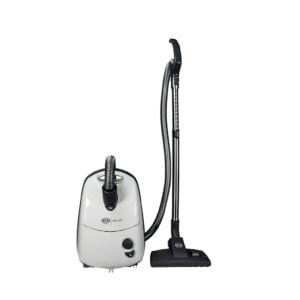
- Edge Cleaning5.0
Sebo consistently performs above all others on organic edge cleaning, due to a design that gives a narrow gap between the outer edge and the suction chamber on every one of their powered heads and floor attachments.
Measured by Observational Performance Assessment

- Anticipated motor and machine lifespan4.5
Reading 16 Years
SEBOs are designed to stand extended use, and they even plan for abuse, but this unit has the shortest lifespan of any SEBO model we handle. I do not think it is a quality issue. It is how the design takes abuse. The blower motor rides high in the upper body, it does not pivot which I think actually helps protect the motor but regardless it does get knocked back and forth in its housing. That housing is well designed, but so is your skull, and you can still get a concussion without ever hitting your head. The bag also sits directly on top of the motor, so any moisture the machine picks up goes straight in. You should not be vacuuming moisture, but it happens, and this design forgives it less. These are narrow machines, and they just plain get the snot kicked out of them, so housing damage shows up earlier too. The costly repair, a motor or housing, tends to land around year 16, and most owners replace it with the same machine. That last part says plenty.
- Ease of Repair2.8
I have a hard time calling SEBO an easy repair, and this machine puts a sharp point on the issue. These machines do a lot, which means they are not simple, and nothing about how they come apart is obvious. The assembly is clearly built to be maintained and repaired once you know how everything fits, so for a technician who knows the model, repairs are fast and easy. For somebody who wants to pick up a screwdriver and figure it out, chances are better than not that something gets broken that was not broken before. There are plenty of repair videos online, ours especially, but needing 45 minutes of homework before a repair lowers the practical ease all by itself. The flip side is the maintenance work. Clogs, brush rollers, and filters all snap apart, among the easiest we handle. The core jobs, motors and circuit boards, are demanding and belong in a service center anyway.
- Sebo repair videosFrom JoshOpens youtube.com.
- Edge Cleaning5.0
Sebo consistently performs above all others on organic edge cleaning, due to a design that gives a narrow gap between the outer edge and the suction chamber on every one of their powered heads and floor attachments.
Measured by Observational Performance Assessment

- Edge Cleaning5.0
Sebo consistently performs above all others on organic edge cleaning, due to a design that gives a narrow gap between the outer edge and the suction chamber on every one of their powered heads and floor attachments.
Measured by Observational Performance Assessment
Their brand assessments
Views this reviewer holds about a whole brand, applied to every machine of that brand.

- Claim Process3.5
Bissell's current warranty process is strictly telephone support from an overseas call center, and the history of how it got that way explains the present. Until 2025, Bissell ran warranty through independent service centers. An owner brought their machine to a locally owned shop, the shop fixed it, and Bissell got billed. The rates Bissell paid were laughable, but the arrangement worked, because a free warranty repair was often how a customer learned their local service center existed at all, and some became customers for life. Bissell kept the claim process easy on both ends, and I will give them this: they were the last brand we maintained a warranty contract with that we did not even sell. Then, around 2025, they abruptly announced the contracts were cancelled. It shocked the service centers, who thought they were providing Bissell's customers a great option. The apparent plan was to handle everything by phone and perhaps ship machines to a centralized repair center, and the rollout looked poorly planned enough that Bissell reversed itself and pushed the cancellation out several months. Too late. Most shops wanted nothing more to do with Bissell after a slight like that, which left Bissell owners with few options for months. Today, from customer reports and from claims I have personally listened to on speakerphone at our intake counter, the process is a long mechanical script. The call center walks you through generic troubleshooting step by step, and if you survive the whole script, on a first claim they mail you a new machine and tell you to throw the old one away entirely. Environmentally, not a great option. But I will report it straight: owners come out the other side feeling warm and fuzzy, because a phone call got them a new machine.

- Anticipated motor and machine lifespan4
Early machines were mediocre cleaners with reasonable longevity. Modern machines clean better, no argument from my bench. But that performance came from pushing the design harder, and the machines pay for it. Increased brush friction creates more heat, and plastic housings and components fail from melting. That is not wear, that is a machine cooking itself doing the job it was sold to do. Longevity suffered dramatically as generations progressed. I've seen this cycle with plenty of brands. A consumer runs that first machine for fifteen years. It works pretty ok, and somewhere around year five or eight they are telling friends to buy one. When it finally dies, they naturally buy the same brand. The new machine feels like a revelation, partly because it is new and their old one was wearing fifteen years of skipped maintenance, and partly because it genuinely was designed to clean better. Then it dies in three or four years, or worse. Their first lasted fifteen, so they write this one off as a fluke. By now the brand has made the warranty process difficult enough that most people skip it and just buy a third machine from the same brand. The third dies fast too. Half of them buy a fourth and keep the wheel turning. The other half swap brands and run the same lap somewhere else. A few walk into a vacuum service and sales center like ours, and those are the ones who break the cycle. A machine you cannot reasonably repair has exactly one lifespan, its first major failure, and modern Dysons arrive at that appointment early. Buy one for what it does today, not for how long it will keep doing it. The old ones earned their keep through boring durability. The new ones are sprinters, and the brand makes money on you remembering the marathon runner.
- Claim Process1
When Dyson landed in the US they contracted hundreds, maybe thousands, of independent vacuum shops as warranty repair stations, ours among them. You brought your Dyson to a local shop, a real tech fixed it, Dyson paid the bill. A warranty claim does not get more painless than that. In 2024 Dyson cancelled those contracts, most or all of them, ours included. Warranty service for the entire country collapsed to roughly a dozen corporate owned Dyson stores. Shortly after, Dyson fired its US based phone reps and sent telephone support overseas. Today, unless you live near one of those stores, there is no counter to walk up to. A glance at the Dyson sub reddit shows daily complaints about phone support and the warranty process. Our front of house reps regularly report Dyson owners choosing to pay us for repairs rather than deal with Dyson phone support. Think about that: people paying out of pocket to avoid a free warranty. I can only rate what exists now, and that is a dismantled nationwide warranty network replaced with a phone number people don't want to call.
- Ease of Repair2
Dyson repair is a tale of two companies. The early machines, late 2000s through the mid 2010s, were built like somebody expected them to be fixed. Nearly every part existed as a small component. If a belt broke you bought a belt. Around 2014 that philosophy appears to have died. On modern designs the belt is not a part you can purchase on it's own. The entire cleaner head is the part. We regularly see one small piece fail and force replacement of a huge assembly, in the worst cases as much as 40 percent of the whole machine, priced like it too. A repair that should cost lunch money becomes a bill that has customers doing the math on a new vacuum, and I do not think that math is an accident. Two things keep modern Dysons repairable at all. First, they sell in such volume that the aftermarket now manufactures single components for the high failure parts Dyson refuses to offer. Second, there is a deep public library of repair videos, ours included, showing exactly how to use them. A handy owner or a decent shop can still save many of these machines cheaply, but only where the aftermarket bothered to show up. Everywhere else you are buying a big costly assembly at retail, if you can even get it. Engineered away from repair, partially rescued by the aftermarket.
- Parts Availablity2
Since 2010 I have watched the Dyson parts supply go from excellent to functionally dead. Originally Dyson ran parts through a US distributorship and nearly everything was available at the component level. Around 2018 the cracks showed. High failure components would vanish for months at a stretch while customers sat on dead machines waiting for one critical part. The pandemic supply chain mess gave that a convenient excuse, but when the supply chain cleaned up, we saw no positive change with Dyson parts. Today legacy machines have virtually no component level parts available. Current machines are serviced through large assemblies only, so when a tiny part fails a massive and costly assembly is the only repair option. Even those assemblies come and go without warning. We routinely find parts silently discontinued. in 2016 the sole US distributor of Dyson parts, the largest vacuum parts house in the country, closed abruptly after a century in business. There is now no direct parts source for independent service centers in the US. When we need a Dyson part we buy the big assembly at consumer retail from Dyson or off Amazon, same as you would. The single saving grace is scale. Dyson sells so many machines that aftermarket manufacturers now produce a handful of the highest failure components Dyson never offered. That thin aftermarket supply is the only thing between my rating and the floor, and I am being generous because the afermarket stepped up.
- Service Documentation2
Early Dyson published detailed schematics and issued official repair videos to their contracted service centers. To my knowledge nothing new has come since they cancelled those US service contracts in 2024, so on the newest machines, we are all flying blind. I am not sure how much good fresh schematics would do anyway. A schematic is a shopping list, and Dyson sells almost nothing at the component level, so you would be studying diagrams of parts you cannot order. What keeps the lights partly on is history and overlap. Older schematics are still available on sites such as ours and a few others, and some of the newer upright units share a lot in common with previous generations, so you can sort of stumble through a new machine with an old map. Then there is YouTube, where Dyson repair videos number in the literal thousands. I wish that were better news than it is. A lot of them are spam, the "QUICK EASY DYSON FIX ONE STEP" variety, thumbnails first and information never, and you wade through that pile to find anything useful. Useful ones exist, and tend to come from actual vacuum service centers that fix these machines for a living. So the current picture is old diagrams, educated guesswork, and a noisy video library with good material buried in it. Not nothing but in my opinion nowhere near what a brand this size owes the people keeping its machines out of the landfill.

- Anticipated motor and machine lifespan8
My longevity estimate for Miele comes from ongoing experience with modern units, and the trend line bothers me. Over the last decade our service centers have tracked an increase in component failures across multiple Miele product lines. What concerns me is the pattern. The failures repeat over the same few components, again and again, and the high failure component generally gets neither redesigned nor acknowledged. Every manufacturer ships a part that turns out weaker than intended. Watching the same part fail for years with no acknowledgment is deeply concerning however. On timing, we noted a significant increase in a series of specific components shortly after we became aware Miele was operating factories in China. There is no transparency about component level country of origin, so I cannot draw a direct correlation between those failures and manufacture outside Miele's German factories. What I can say is that the machines coming through our doors fail more than the Miele of ten years ago, in predictable places, and I am unaware of specific redesigns to address the issues. These are still repairable machines and we keep plenty of them running. However, I do not believe the 25 year lifespan we expected from Miele in the 2000s is reasonable to expect of today's units.
- Ease of Repair2.8
I feel like working on a Miele is like working on a BMW. There is serious (over) engineering in front of you, and the whole time you are asking, was there not a simpler way to do this? Almost nothing on these machines is obvious. Fasteners are hidden throughout, and in many cases they are paired with hidden clips and snaps, so the panel that looks like it should lift off after two screws is actually holding on in five more places you cannot see. And once you have found everything, you meet the clips themselves. Often parts are fragile and held in by clips that you have to push just right to get apart. Not hard, not soft, just right. Push wrong and you are not doing a repair anymore, you are creating one. So Miele repair rewards the tech who has been inside one before and punishes everybody else. On our bench the machines come apart and go back together, but every disassembly feels like the engineers were solving a puzzle nobody asked them to write. For a consumer at the kitchen table, this is not a machine that welcomes you in. A machine can be built well and still be built unfriendly, and that for me is Miele.
- Parts Availablity3.6
Miele parts availability has been problematic since late 2019. Around that time Miele began rolling out a just in time inventory system, the kind that in theory reduces the inventory a company has to carry and increases supply chain efficiency. Just in time systems are famously touchy to begin with, highly complicated with little margin for error. Then the pandemic landed literally as they were rolling it out. Massive shortages of critical components followed, and some parts went unavailable for over a year. Part of this may trace to Miele leaning into components manufactured at their Chinese factories, a shift that started in the 2015 time frame. What percentage of the components in their German built machines actually comes from China is unclear. But when the pandemic hammered supply out of China, Miele's parts supply buckled right along with it, and the same stretch barely registered at SEBO, their biggest competitor, who does not source repair components from Asia. Draw your own conclusion. Today, with ongoing geopolitical issues, we continue to see consistent delays across a wide variety of parts. Credit where it is due though. In broad terms Miele does make parts available at the component level, so when the part finally arrives you are replacing the piece that failed instead of half the machine, and the repair stays cost effective. Worth noting as well that Miele parts prices tend to run higher than similar premium machines. So the design supports repair, the pipeline stumbles, and the invoice stings.
- Service Documentation4.8
Miele does produce schematics for every model they make. Getting your hands on them is the trick. They are not widely available, and left to the manufacturer they might stay that way. Colorado consumer protection law requires manufacturers to provide repair documentation to end users, and as a Colorado vendor we comply happily, so every Miele schematic can be found on our site. The repair videos made by independent dealers on YouTube are remarkably good, and that is not the usual state of vacuum YouTube. A handful of Miele loving dealers, looking at you Performance Reviews, have poured serious time into high quality repair videos across a wide variety of Miele models, walking through the machines the way a tech actually works on them. My videos are pretty ok too. Between the schematics on our site and that video library, a Miele owner or shop has a better documentation situation than the brand's own distribution would suggest. These machines can fight you coming apart, but at least you will have the map and a guide while they do it.

- Claim Process1.8
The Oreck story still ticks me off. David Oreck built the company, retired, and sold it to private equity back before PE had the reputation it has today. What happened next shocked even him. They gutted the company, ran it to the edge of bankruptcy, and sold the brand name to Techtronic Industries of Hong Kong. In the final stretch the PE owners started slapping super long warranties on products, even lifetime warranties. Why not, if you are liquidating next week. Then Techtronic halted production of the US made machines and their parts, so nobody could do warranty repairs, Techtronic included. Now, brick and mortar Oreck warranty centers do technically still exist. But those Oreck stores were privately owned, and this whole fiasco put almost all of them out of business. We are still a warranty center today because we absorbed the customer base from the closed Oreck stores in our area. The fix for the unrepairable lifetime machine is a masterpiece of the genre. They hand you, out of the goodness of their little hearts, a newer unit assembled in USA from internationally acquired parts, and your warranty is now over. A lifetime promise, retired by the replacement that honors it.
- Ease of Repair3.6
Orecks sit on the easier side to repair because there is not much machine to them. Simple, direct designs with few parts and nothing exotic in the way. A tech or a handy owner can get into one without a fight, and that simplicity is a big part of why so many of them lasted decades in the first place. The caveat comes with age. These machines wear out in strange ways, and what starts as a simple repair can get extensive fast. You open one up for a belt and find numerous parts worn at once, with half the machine held together by caked dirt and years of crud. It comes apart but it does not go back together. So the design earns its reputation for simplicity and the years complicate it. Budget for the repair you came in for plus the two you find inside.
- Parts Availablity2.2
Parts availability has not been great since the acquisition. Techtronic ceased production of virtually all parts for the machines built before they bought the brand, and those classic Orecks are most of what exists in the world. If you own one, chances are nothing is available. The newer units, sold primarily on Amazon, do a little better on paper, but fewer parts are offered for them and what does exist is often out of stock. That is a hard landscape for a machine family famous for lasting decades. The classics that could run another ten years cannot get the parts to do it, and the new machines were not built to inherit that reputation. A simple, durable design is only half of repairability. Somebody still has to sell you the piece that wore out, and at Oreck today, mostly nobody does.
- Service Documentation2
Oreck documentation is not great, saved partly by the machines being simple enough that documentation matters less. The repair videos made by service centers like ours are easy to follow because there is not much complexity to explain. The factory paper is the problem. Oreck schematics are often outdated and flat out incorrect, carrying old part numbers that no longer exist and sometimes part numbers that are simply wrong. A diagram that sends you ordering a discontinued part is worse than no diagram at all. They recently changed over to a new system for delivering schematics, and then made it available only to dealers, so the public sees no benefit from the update. The working formula for an Oreck owner is a service center video for the how and a call to somebody like us for the what, because the factory paperwork cannot be trusted on its own.

- Anticipated motor and machine lifespan16
Riccar knows their machines are going to be pushed hard, and they build like it. When somebody needs muscle car level performance out of a vacuum, Riccar is where we go. Performance usually gets paid for out of the machine's lifespan. Push the design harder, watch it die younger. Riccar built for the abuse instead. The engineering assumes the machine will be worked, so the machine is made to take the work. Just as important, these units are intended to be maintained and repaired. A machine intended for maintenance gets serviced on schedule, gets fixed when needed, and keeps running long after a disposable machine would have hit the landfill. Riccar backs the intent with the long tail that makes it all work: supplies and repair components remain available today for many models that ceased production a decade ago or more. When the parts outlive the production run, the lifespan question belongs to you and your maintenance habits, not to a discontinued parts catalog. A muscle car driven hard still lasts when it is built for the beating and the parts keep coming. Same principle here just its a vacuum so not quite as cool.
- Ease of Repair4.8
Riccar tends to be one of the easiest brands to work on, and that is not an accident. The biggest factor, and anyone who has done appliance repair will understand this one, is that most of their machines use the same size fastener throughout the unit. One driver in hand and you can go end to end. The design is generally straightforward, and the majority of components fit together with no gotchas, hidden snaps, or buried fasteners. That makes sense when you consider their whole business model: these machines are built to be serviceable in hundreds of independent service centers across the country, and it shows in how they come apart.
- Parts Availablity4.9
Most modern Riccars have high parts availability at the component level. Component level means when a small part fails, you buy that small part. You are not replacing a large costly assembly because one little piece inside it gave up. In this industry that approach has become the exception, and it is the difference between a repair bill a customer shrugs at and one that sends them shopping for a new machine. The caveat is supply. Riccar sources components worldwide, so the supply challenges of the last decade have definitely impacted them, and we have seen delays on some high volume parts. But weigh that against the majority of companies that just flat out do not sell repair components at all, and a few delays traceable to geopolitical events do not count too heavily against them in my opinion. There is a difference between a company whose parts run late and a company whose parts do not exist. Riccar sells the exact piece that failed, and a machine built that way gets fixed and goes home. In a market trending hard the other direction, that is worth credit.
- Service Documentation5
Schematics are available for all models from numerous free internet sources, ours included. Riccar is arguably the most repairable brand, and repairable machines attract documentation the way engines attract wrenches. Independent service centers and hobbyists have produced thousands of repair videos on YouTube covering these machines. Whatever broke on yours, the odds are somebody already filmed that exact fix on your model. Put the two together and you are never working blind. Diagram in one window, tutorial in the other, part on order. That combination is what repair support is supposed to look like, and in a market where most manufacturers publish nothing and hope the machine reaches the landfill quietly, it stands out.

- Anticipated motor and machine lifespan25
SEBOs are designed to stand extended periods of use and yes they even plan for abuse. The designs are mature. These are not machines reinvented every two years to chase a feature list. Durability and ease of maintenance sit in the design as a forethought, not an afterthought, and it shows in how they age. Here is my favorite piece of evidence, and it rolls through our Arvada location regularly. We see machines built by SEBO's parent stamped "made in WEST Germany, Motor made in Englewood Colorado." Sit with that stamp for a second. West Germany stopped being a country in 1990. These machines outlived the country printed on their label, and they are still on the job. That is what a quarter century design philosophy looks like on an actual bench, not in a brochure. Will a SEBO need repairs along the way? At some point, sure. Twenty five years is a long road. But the cost of those repairs runs reasonable and sane, and parts availability as the machine ages is better with SEBO than any other brand we know. That last part is what makes the 25 year number possible. A long lifespan is not only about what the machine can survive. It is about whether anybody will still sell you the part in year eighteen. With SEBO the answer is yes more often than any other brand we have worked with.
- Ease of Repair4
I have a hard time calling Sebo an easy repair. They are machines that do a lot, and that means they are not particularly simple machines either. The assembly is clearly designed to be maintained and repaired once you know how everything goes together, but this is not the sort of vacuum where you can just pick up with a screwdriver and start exploring with no knowledge of the model. On the flip side, for work that borders on maintenance, things like clearing clogs and swapping brush rollers, they are among the easiest machines we handle. Everything snaps apart, so brush roller and filter replacement is easy, and clogs come out without a fight. Where repairs get genuinely challenging is core component work like motor and circuit board replacement. Excellent for the common jobs, demanding for the big ones that might be better in a service center any way.
- Parts Availablity5
This brand is one of the best examples of ready parts availability in this industry, and the reasons stack up structurally no accidentally. Long production runs of a given model mean the parts pipeline for that model stays alive for years instead of turning over every season, and even a number of years after a model is retired, parts continue to be available. Currently almost every unit they currently sell in the US is available with a ten year warranty, and a company that puts ten years on the box has little choice but to keep components flowing for years. Their machines are sold worldwide in high volume and the components come out of Germany. Through the supply chain mess of the last decade they were barely touched, while we watched other brands go months or years missing critical parts. I think a lot of this culture comes from their European base, where consumer protection laws requiring repair components tend to be more robust. Whatever the root cause, the result at our counter is simple. When a SEBO needs a part, we get the part. In a market where components quietly disappear while machines sit dead waiting, that kind of boring reliability deserves to be called out loudly.
- Service Documentation5
SEBO prints their schematics right in the user manual. Understand how far outside the norm that is. Normally the best a vacuum owner can hope for is that a site like ours has gotten hold of a model's schematics and posted them online. The manufacturer itself showing you how the machine goes together is unheard of. SEBO hands it to you in print, in the box, with the machine. That one choice tells you everything about the intent behind these machines. They are built to last a long time and to be repairable. And because that intent is understood across the trade, the independent side has piled on. Dozens of independent service centers like ours have produced hundreds of repair tutorials for every model, covering numerous repair types. So a SEBO owner has the factory's own diagrams sitting in the manual drawer and a deep library of tutorials from the shops that fix these machines every week. In an industry where most manufacturers publish nothing and quietly hope you throw the machine away, SEBO documents theirs like they expect it to end up on somebody's bench someday, and they plan for that day.

- Claim Process1.6
Shark does not have physical warranty service centers. Claims are filed online or by phone only. Their warranty FAQ instructs customers to first work through Shark's troubleshooting on their own, and whether your machine is defective is decided at SharkNinja's sole discretion. It is hard to find official warranty documentation outside of the so called VIP warranties on Shark's official website. The VIP warranty applies only to purchases made directly from SharkNinja, specific TV offers and online configurations. The same machine off a store shelf may have a different warranty policy. Under VIP, wearable parts are not covered, and the policy names brushrolls a wearable part. It is correct that brush rollers wear over time. However, the most common Shark failure we see is the brush roll melting and seizing during normal use. It's rare a Shark brush roller actually lasts long enough to wear out. The warranty takes what is, in our experience, the most commonly failed part and defines it out of coverage as maintenance. It's also worth noting they don't sell brush rollers for the majority of their machines. And then the clause that I've seen disappoint more than one Shark owner. On the lifetime warranty, once a replacement unit is issued, coverage ends two years after you receive it. A lifetime warranty that converts to a two year warranty the first time Shark replaces your unit is not a lifetime warranty. It is a countdown with good marketing. Additionally, a shipping and handling fee may apply on the replacement's delivery, a bill stapled to a free warranty. Overall, there are worse warranty processes in the industry, but the trapdoors on this one are extensive and the inconvenience of the process leaves a lot of people not even bothering.

- Ease of Repair4
Once upon a time Simplicity and Riccar products were identical machines wearing different badges. That is no longer the case. Today Simplicity tends to be Tacony's cheaper and less repair friendly line, though significant overlap between the two still exists. So the fair way to put it is this. Not as easy to work on as Riccar, and still easier than most of the industry. The models that share Riccar bones keep the traits anyone who has done appliance repair will appreciate. Mostly one fastener size through the whole unit, so one driver in hand takes you end to end. Straightforward designs where the majority of components come apart with no gotchas, hidden snaps, or buried fasteners. That comes from the same business model, machines built to be serviceable in hundreds of independent service centers across the country. The budget end of the line gives some of that away, and even there you are ahead of most brands.
- Parts Availablity3.8
Parts availability on Simplicity follows the same split as everything else about the brand. The models that share Riccar bones share Riccar's parts pipeline, and that means component level availability. When a small part fails, you buy that small part instead of replacing a large costly assembly because one little piece inside it gave up. In this industry that has become the exception. The cheaper Simplicity only models give some of that back, with fewer components offered individually. The caveat on all of it is supply. Tacony sources components worldwide, so the last decade's supply problems have brought delays on some high volume parts. But there is a difference between a company whose parts run late and a company whose parts do not exist. On the machines that matter, Simplicity sells the piece that failed, and a machine built that way gets fixed and goes home.
- Service Documentation4
Schematics for Simplicity machines are available from numerous free internet sources, ours included. The models that share Riccar bones get a bonus here, because the repair videos made for their Riccar twins apply almost screw for screw, and independent service centers and hobbyists have filmed thousands of those. Whatever broke on yours, odds are somebody already filmed the fix on this machine or its twin. The Simplicity only budget models draw thinner coverage, so expect more hunting there. But for most of the line you are never working blind. Diagram in one window, tutorial in the other, part on order. In this industry, that is rare company.